





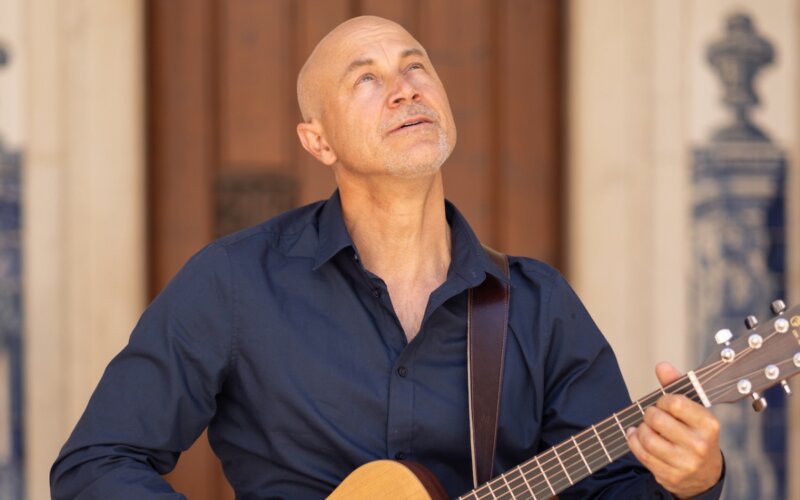
A stranger at a surf camp in Portugal probably didn’t know she’d end up as the subject of a song. But that’s how these things go for Dave Curl, who has spent more than twenty years turning the kind of moments most people forget by the next morning into music that sticks around. His new single “Julia,” out August 12, 2026, started with one of those chance encounters and grew into something quieter and stranger: an acoustic dream-pop meditation on memory, freedom, and the idea that the things worth holding onto can’t actually be seen.
That last part comes straight from Antoine de Saint-Exupery. Curl builds “Julia” around a line most people know from The Little Prince, the notion that what’s essential is invisible to the eye and only the heart gets it right. It’s the kind of borrowed philosophy that could easily tip into greeting-card territory, but Curl keeps it grounded by tying it to a specific person in a specific place. Julia isn’t an abstraction. She’s someone he met, floating in the water on a summer breeze, and the song treats that fleeting introduction as reason enough to write.
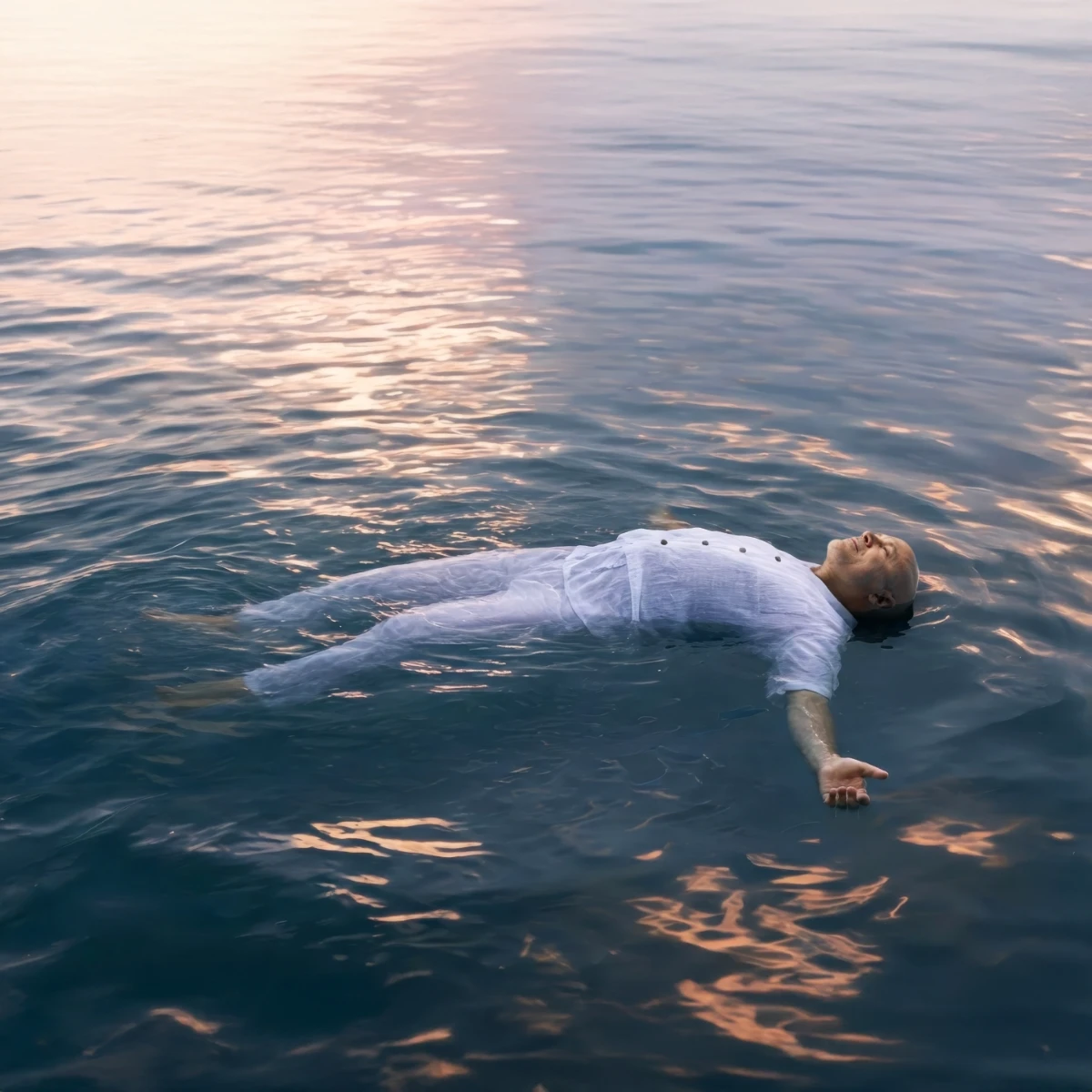
Musically, this is softer terrain than a lot of Curl’s catalogue. He’s a Swiss singer-songwriter with English-Australian roots, and his usual mode is folk-pop-rock with enough of an alternative edge to keep it from sounding too clean. “Julia” leans further into the dream-pop side, all peaceful guitar, moving bass, and a vocal delivery that stays close and unhurried. There’s no big swing for a hook, no manufactured lift. The song just drifts, which suits a track about someone described as an angel of the ocean, living young and wild and free with a rose in her hair.
The lyrics lean into that imagery without apologizing for it. Julia turns art into a dream, radiates like a rainbow, keeps the singer believing in something. It’s romantic in the old sense of the word, more about wonder than desire. And the closing lines give the whole thing away as memory rather than present tense: by the end she’s “just a memory of a past scene,” someone whose magic Curl can still feel even though the moment itself is gone. That’s really the point of the song. It’s less about Julia the person and more about what she represents, that a brief encounter can leave a mark that outlasts the encounter itself.
The visuals match the mood. The official lyric video was filmed in Fuerteventura, Spain, and it’s a slow, cinematic piece built around volcanic hills, drone footage sweeping across arid terrain, and Curl sitting alone with his acoustic guitar in warm gold light. Loic Michel handled the filming, with editing by Nevena Deljanin Prvanovic and artwork by Andrea J. Ruiz. The palette runs to muted earth tones and pale blue water, and the editing relies on long shots and dissolves that occasionally layer two images together for a hazy, dreamlike effect. It’s the kind of video where a small human figure keeps getting placed inside a very large landscape, which feels right for a song about smallness and open space.
Curl has a habit of filming in places most people wouldn’t bother hauling a guitar to. He once shot a video at a medieval watchtower on the cliffs of Portugal, and Fuerteventura’s volcanic overlooks fit that pattern. As he puts it, he writes honest songs and then finds increasingly impractical locations to film them in.
“Julia” isn’t a debut or a reinvention. It’s the newest entry in a catalogue that includes two albums, Introducing and Lockdown – Seven Nations, the EPs Slave To Instinct and Hold Me Close, and a run of singles going back to 2021. Along the way Curl has picked up more than 2 million Spotify streams and landed in over 2,000 playlists, numbers he says still surprise him when he checks. He’s played more than 200 shows, everything from living-room concerts to festival slots, and he handles most of the business himself. Independent music, in his telling, means being the artist, the label, the tour manager, and sometimes the guy carrying the amp up three flights of stairs.
What’s interesting about Curl is how little he seems interested in chasing whatever’s popular. “Julia” wasn’t written for an algorithm. It was written because a moment happened and he wanted to keep it. Twenty years into this, that instinct is the throughline, the songs that last tend to be the ones written for the right reasons rather than the ones engineered for a playlist.
You can pre-save “Julia” ahead of its August 12 release, and find the rest of Curl’s music and tour updates on his website, Spotify, Instagram, YouTube, and TikTok.