





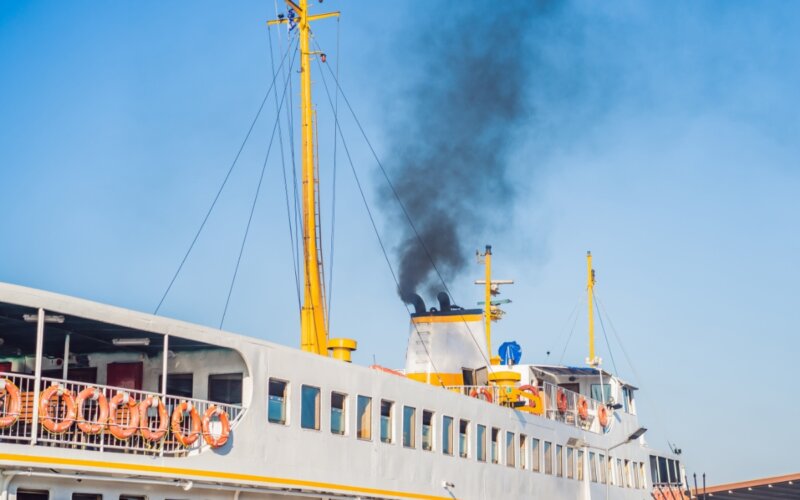
Most people who spend twenty years raising five kids and working in real estate would be thinking about what’s next for themselves. Maybe a vacation. Maybe a hobby. Maria Andrade looked at diesel-powered harbor boats and decided to start an environmental nonprofit instead.
That’s not a typical midlife pivot. After two decades guiding families through real estate transactions and managing the chaos that comes with raising five children, Andrade founded Harbor Current Foundation Inc. with a goal that sounds borderline impossible: electrify as many American harbors as possible by 2040, then move on to the Caribbean and South America. She’s asking for $10 million to prove it can work in Miami, Annapolis, Charleston, and Boston first.
The question everyone wants answered is simple: why this, and why now?
Andrade’s explanation doesn’t involve some dramatic origin story or epiphany moment. She looked at the numbers. Marine vessels account for nearly 30% of total port emissions, according to the EPA. That pollution sits right in the air that harbor communities breathe every day. Higher asthma rates. Cardiovascular disease. Respiratory illness. The families affected are usually the ones who’ve lived there longest and can’t afford to move somewhere cleaner.
“The time is now and the solutions are here to make the difference,” Andrade says. She’s not theorizing. She’s already working with engineers, policymakers, and harbor authorities to deploy electric ferries and water taxis that replace diesel engines with battery power.
It’s practical in a way that catches people off guard. No grand speeches about saving the planet. No vague commitments to sustainability. Just swap out the diesel boats, install charging stations, and cut emissions by 25 to 40 percent in specific locations. Either it works or it doesn’t.
What Twenty Years in Real Estate Actually Taught Her
Here’s what makes Andrade different from most environmental leaders: she spent decades learning how to bring people together who don’t naturally agree. Her years in real estate taught her that getting diverse groups aligned requires understanding what each person actually needs, not just what they say they want.
That’s exactly what Harbor Current Foundation needs right now. Electric vessels aren’t some untested fantasy. They already operate successfully in multiple countries. The barrier isn’t technology. It’s convincing harbor authorities, city councils, ferry operators, and community groups that the upfront investment makes sense even though the payoff takes time.
Andrade’s years guiding families through complex transitions taught her how to find common ground where other people see conflict. She knows how to talk to engineers about technical specs, investors about return on investment, and community leaders about health impacts without losing any of them along the way.
“Empathy is the greatest renewable resource we have,” she says. “It fuels collaboration, courage, and change.”
That’s not motivational speaker talk. It’s strategy. You can’t electrify 8,000 American harbors by telling people what they should do. You have to show them why it’s in their interest to do it.
The Four-City Plan That Has to Work
Harbor Current Foundation is starting with proof of concept. Miami handles major international port operations and faces immediate climate pressure. Annapolis has a historic waterfront where changes can happen faster. Charleston’s tourism economy means clean transportation could become a selling point. Boston already runs established ferry systems ready to make the switch.
Each city represents a different challenge. If electric vessels work in all four environments, they’ll work almost anywhere. That’s the bet.
The $10 million budget breaks down to about $2.5 million per harbor. That covers vessel acquisition or retrofitting, charging infrastructure installation, feasibility studies, community education programs, and operational costs. It’s specific enough to be credible but flexible enough to handle the unexpected problems that come with pioneering new technology.
Success in those four cities creates momentum for the next wave. Each working demonstration makes it easier to convince the next harbor authority, the next city council, the next ferry operator. Andrade can’t single-handedly transform every American harbor, but she can create the proven blueprint that makes the transformation inevitable.
Why It Had to Be Now
The timing matters. Federal clean energy incentives are available right now. Coastal cities need emissions solutions right now. The global maritime industry is already moving toward electrification. Harbor Current Foundation isn’t proposing some untested theory. They’re deploying existing technology in a structured, measurable way.
But there’s something else driving the urgency. Andrade spent twenty years watching her kids grow up, watching families navigate transitions, watching communities adapt to change. She knows how quickly time passes when you’re just living your life. Harbor communities have been breathing diesel exhaust for generations. They don’t have another decade to wait for someone else to fix it.
The foundation launched this year with an 18-month timeline to get pilot vessels in the water. Two years to demonstrate the full model across four cities. Then national replication. It’s aggressive, but that’s intentional. Incremental change won’t cut it when waterfront neighborhoods are dealing with health impacts today.
What sets this apart from typical environmental initiatives is the refusal to treat harbor pollution like it’s just how things are. Andrade looked at a problem everyone else had learned to tune out and decided it was worth dedicating herself to fixing it. Whether that decision came from twenty years of accumulated perspective or just reaching a point where staying still felt worse than taking a risk, the result is the same.
Someone finally stopped accepting that harbor communities should just keep breathing polluted air because that’s the cost of waterfront living. Sometimes change starts that simply. Not with perfect timing or ideal circumstances, but with one person saying the quiet part out loud: this has been a problem the whole time, and we’ve all been pretending it isn’t.