





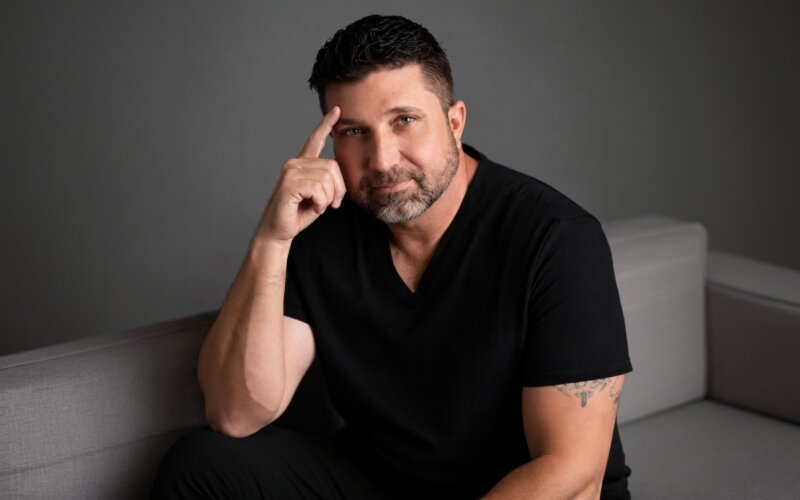
NeuroKnights is the kind of project that usually gets funded by a grant, an investor, or a founder’s savings. Benjamin Irvine is funding it with songs. Every spin of “Heads High” or “We Stayed Anyway” on the radio is, in his mind, a small contribution toward something he cares about more than airplay: a children’s education platform by that name. The music is the engine. The kids are the point.
That’s the unusual part of Irvine’s story. His growing catalog isn’t built to chase streams or land a label deal. It exists to fund and promote NeuroKnights.com, a site he designed to give brain-science learning to children who don’t have access to strong schools or the technology that comes with them. He’s clear about the gap he’s trying to close. Education, in his view, shouldn’t depend on the zip code a kid happens to grow up in, and plenty of children around the world get left out simply because of where they live. The music is how he plans to reach them.
To understand how he got here, you have to go back further than the songs. Benjamin Irvine grew up around music in a way most people don’t. As a kid, he toured with his grandfather to gigs, tagging along with a country-western cover band called Lloyd Meddock and the Melody Boys. That early exposure stuck, even as his life took him in other directions. He served six years with U.S. Army Airborne at Fort Bragg, then built a career in power generation, working in generator engineering and turbine service and earning a business management degree from the University of Phoenix. Music stayed in the background for decades.
Then came “Never Be Lonely.” Irvine wrote it for his 30th wedding anniversary, a gift meant to mark three decades of marriage. It wasn’t supposed to launch anything. But writing it showed him something about songwriting that he hadn’t fully tapped into before, the way a song can carry a feeling that plain words sometimes struggle to express. That one track pulled him back toward poems he’d written over the years, and he started imagining them as finished songs rather than pages in a notebook.
He didn’t try to do all of it himself. Benjamin Irvine brought in vocalists, musicians, and producers through Fiverr to turn his acoustic sketches into fully arranged tracks. He’d supply the words, the emotional direction, and the basic musical bones, and the hired talent handled the performances and production. It’s a practical setup for someone who knows what he wants a song to say but needs other hands to make it sound the way he hears it in his head.
What he’s building those songs for is the more ambitious project. NeuroKnights is a brain-science learning platform aimed at kids ages 7 to 12, built around heroic characters who guide children through how their minds actually work. There’s Sir Cortex, the self-styled master of the mind, plus a cast that includes Synapse, Glia, Amygdala, NeuroShield, and Hipp, each one attached to a real piece of how the brain functions. The platform wraps lessons in games, stories, and challenges, with a kids portal, parent controls, and progress tracking. The idea is that children learn focus, emotional resilience, and critical thinking without feeling like they’re sitting through a lesson.
Some of the storytelling gets surprisingly real for a kids’ platform. One book concept follows a boy named Sam who takes a sip of an energy drink and wakes up a villain called Addiction, who wraps the brain’s reward center in glowing chains and keeps convincing Sam he needs more to feel good. The brain characters have to band together to help him break free. It’s a heavy subject handled through cartoon logic, and that’s sort of the point. Benjamin Irvine wants kids to understand choice and self-control before they’re old enough to be tested on either.
The platform also takes a deliberate stance on artificial intelligence. Rather than treating AI as something to be scared of, NeuroKnights frames it as a tool kids should learn to understand, with the goal of building curiosity and problem-solving instead of anxiety. For children growing up in a world that’s changing this fast, that’s a reasonable bet on what they’ll actually need.
Right now the music side is gaining real ground. Irvine reports that his songs are playing on more than 200 radio stations worldwide, with confirmed activity across the USA, UK, Germany, France, Spain, Italy, Ireland, and roughly two dozen other countries reaching as far as Argentina, Indonesia, and Estonia. He’s got five more tracks in various stages of development, including “Mirror Talk,” “Redlights Roulette,” and “Midnight Moonlight,” and a country song called “Built for the Climb” he’d love to hear Kane Brown sing someday.
So the catalog keeps growing, and so does the reach. You can hear where it started on his Spotify playlist or follow the project on TikTok and Facebook, but the clearest window into what Benjamin Irvine is really after is the NeuroKnights site itself. Strip away the radio numbers and the song titles and you’re left with a simple idea: a kid somewhere should be able to learn how their own mind works, whether or not there’s a good school nearby. Irvine wrote his first song for an audience of one. He’s aiming the rest at every kid he can reach.